Research Interests
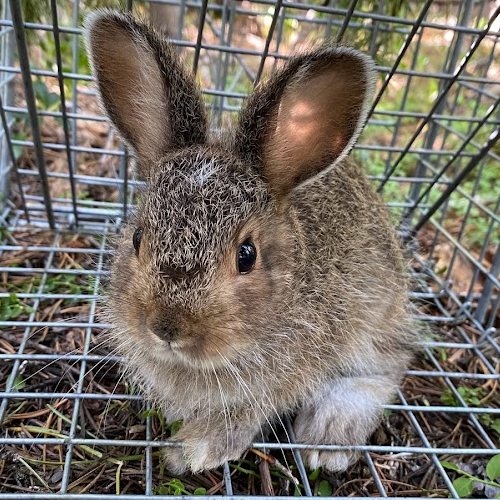
First and foremost I study wild animals, mostly through the lens of their habitat relationships.
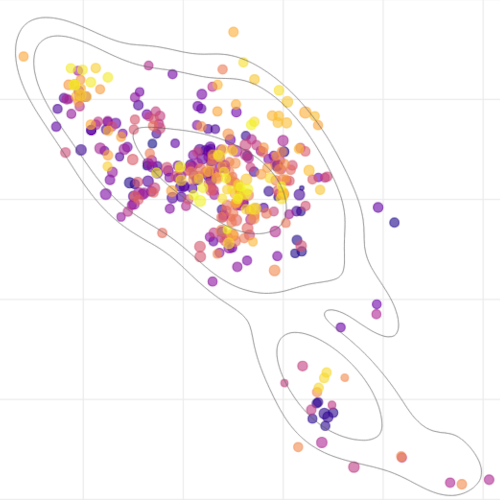
I use data sources like GPS telemetry and remote sensing to study individual movement behavior and how space use patterns emerge across patchy landscapes.
I'm particularly interested in how space use and habitat selection vary across individuals, and what this means for conservation and management.
I also aim to understand how habitat changes influence animal fitness, and more broadly how survival and reproduction contribute to population dynamics.
I've spent the most time thinking about mammals (especially herbivores), but I'm interested in just about any species.
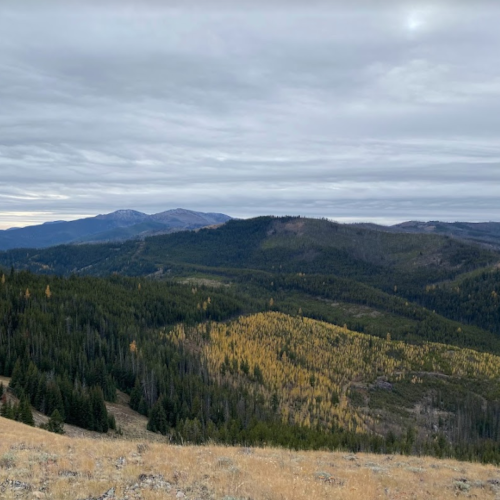
Landscapes are made from patch mosaics and environmental gradients, and influence how wildlife populations live and change.
While individuals might occupy only small portions of a landscape, broader perspectives are often very useful because populations are connected over wider spatial extents.
These days we can use a variety of remotely-sensed data and tools to understand the structure and dynamics of landscapes at scales that are highly relevant to wild animals.
Considering the broader spatial context of wildlife conservation issues is likely to become more and more important as we humans continue to alter entire landscapes,
so this is a major focus of my research.
Over the years I've spent studying wildlife, I've gotten more familiar with the methodology we scientists use to collect and analyze wildlife data.
These include the techniques we use in the field to capture animals, track their movements, and record their presence,
as well as the quantitative methods that allow us to make inference about their behavior and demography.
I think it's really important that we continue to develop and test the methods we use, carefully considering the implications of the methodological choices we make.
Ultimately, I want my work to provide guidance on how to rigorously, effectively, and ethically conduct future wildlife studies.